Essentials for Seniors

iRobot Roomba 694 Robot Vacuum
Removes one of the most physically demanding chores from a senior's routine entirely — no more bending, pushing, or hauling a heavy vacuum around. Combined with app scheduling, it keeps floors consistently clean with zero ongoing physical effort, making it our top pick for aging-in-place independence.
More info ▾
- Hands-free daily vacuuming means one less physically demanding chore
- WiFi and app control lets family members schedule cleanings remotely if needed
- Removes bending, pushing, and lifting entirely from the cleaning routine
- Automatically returns to its dock to recharge without any intervention
- Works quietly enough to run during the day without being disruptive
- Needs a charging dock and reasonably clear floors to navigate effectively
- Less powerful than an upright vacuum on deep or thick carpet
- Requires periodic brush and bin maintenance every few weeks
- Can get stuck on cords, thick rugs, or cluttered floors
- App setup may need help from a family member the first time
- Type: Robot vacuum
- Connectivity: WiFi, app control and scheduling
- Runtime: ~90 minutes per charge
- Navigation: iAdapt navigation with dirt-detect sensors
- Bin capacity: ~0.6 L, empties manually after each run


Amazon Echo Show 8
Video calling and hands-free voice control cover a lot of the 'staying connected' need in a single device — grandkids are a tap or a voice command away, and there's no phone screen to squint at or app to fumble with.
More info ▾
- Simple video calling makes staying in touch with family genuinely effortless
- Voice control via Alexa means no typing or navigating menus for common tasks
- Large, easy-to-read 8-inch screen with adjustable text size
- Can set medication reminders, alarms, and calendar alerts hands-free
- Doubles as a photo frame, showing family photos automatically between uses
- Requires WiFi and an initial setup process that may need family help
- Can feel overwhelming for tech-hesitant users during the first week or two
- Screen glare in bright rooms can make it harder to see
- Voice recognition occasionally struggles with soft or unclear speech
- Ongoing subscription may be suggested for some premium features
- Screen: 8-inch HD display, adjustable brightness
- Connectivity: WiFi, Bluetooth
- Voice assistant: Alexa built-in, always-listening (mutable)
- Camera: Built-in for video calls with auto-framing
- Speaker: Stereo speakers for calls and audio

Aura Carver Mat Digital Photo Frame
Family members can upload photos remotely from their own phones, and they simply appear on the frame — no setup, syncing, or technical steps required on the senior's end at all. It's about as close to zero-effort as a tech gift gets.
More info ▾
- Family can upload photos remotely with zero setup needed on the recipient's end
- Simple automatic slideshow requires no ongoing interaction to enjoy
- No monthly subscription fee for unlimited photo storage via the app
- HD display makes photos look sharp and vivid, not pixelated
- Makes a genuinely emotional, low-maintenance gift for isolated or homebound seniors
- Requires a stable WiFi connection to receive new photos
- Relies on family members staying engaged and actually uploading photos regularly
- Screen size is fixed and can't be swapped for a larger display later
- Initial WiFi connection still needs to be done once, ideally by a family member
- Frame stand is fixed orientation, less flexible than some competitors
- Screen: 10.1-inch HD display
- Connectivity: WiFi
- Storage: Unlimited via the Aura companion app
- Orientation: Portrait or landscape mounting
- Setup: One-time WiFi connection, then fully remote-managed
Homedics Shiatsu Massage Cushion with Heat
Addresses everyday back and neck discomfort and poor circulation without the cost, size, or commitment of a full massage chair — it straps onto whatever chair is already in the house and plugs in.
More info ▾
- Targets back and neck discomfort with rotating shiatsu nodes
- Portable design straps to almost any dining, office, or living room chair
- Built-in heat function adds soothing warmth to sore muscles
- Far less expensive than a dedicated massage chair
- Easy on/off controls with no complicated setup
- Not a substitute for medical treatment of chronic pain conditions
- Massage intensity may feel too strong for users with sensitive skin or thin frames
- Requires a nearby power outlet, limiting where it can be used
- Straps can shift slightly during use on slippery chair fabric
- Heat function draws additional power and increases warm-up time
- Type: Shiatsu massage cushion with rotating nodes
- Heat: Yes, adjustable on/off
- Power: Corded, includes home outlet and car adapter options
- Coverage: Full back and neck area
- Controls: Simple button panel, no app required

Drive Medical Nitro Rollator Walker
A lightweight aluminum frame with a padded seat supports both mobility and independence — it's light enough to maneuver easily but sturdy enough to lean on, with a built-in seat for rest breaks on longer outings.
More info ▾
- Lightweight aluminum frame is easier to push and lift than steel alternatives
- Padded seat allows for rest breaks during walks or errands
- Supports independence and confidence moving around outdoors
- Folds down for easier storage at home
- Hand brakes offer added control and safety on inclines
- Still requires some upper body strength and coordination to maneuver confidently
- Folds but remains bulky to load into a car trunk or back seat
- Higher price than a basic non-seated walker
- Larger frame may be harder to navigate through narrow doorways
- Storage pouch capacity is limited for larger errands
- Frame: Aluminum, lightweight
- Weight capacity: ~300 lbs
- Features: Padded seat, storage pouch, hand brakes
- Wheel size: Designed for both indoor and outdoor use
- Folded dimensions: Compact enough for closet or car trunk storage
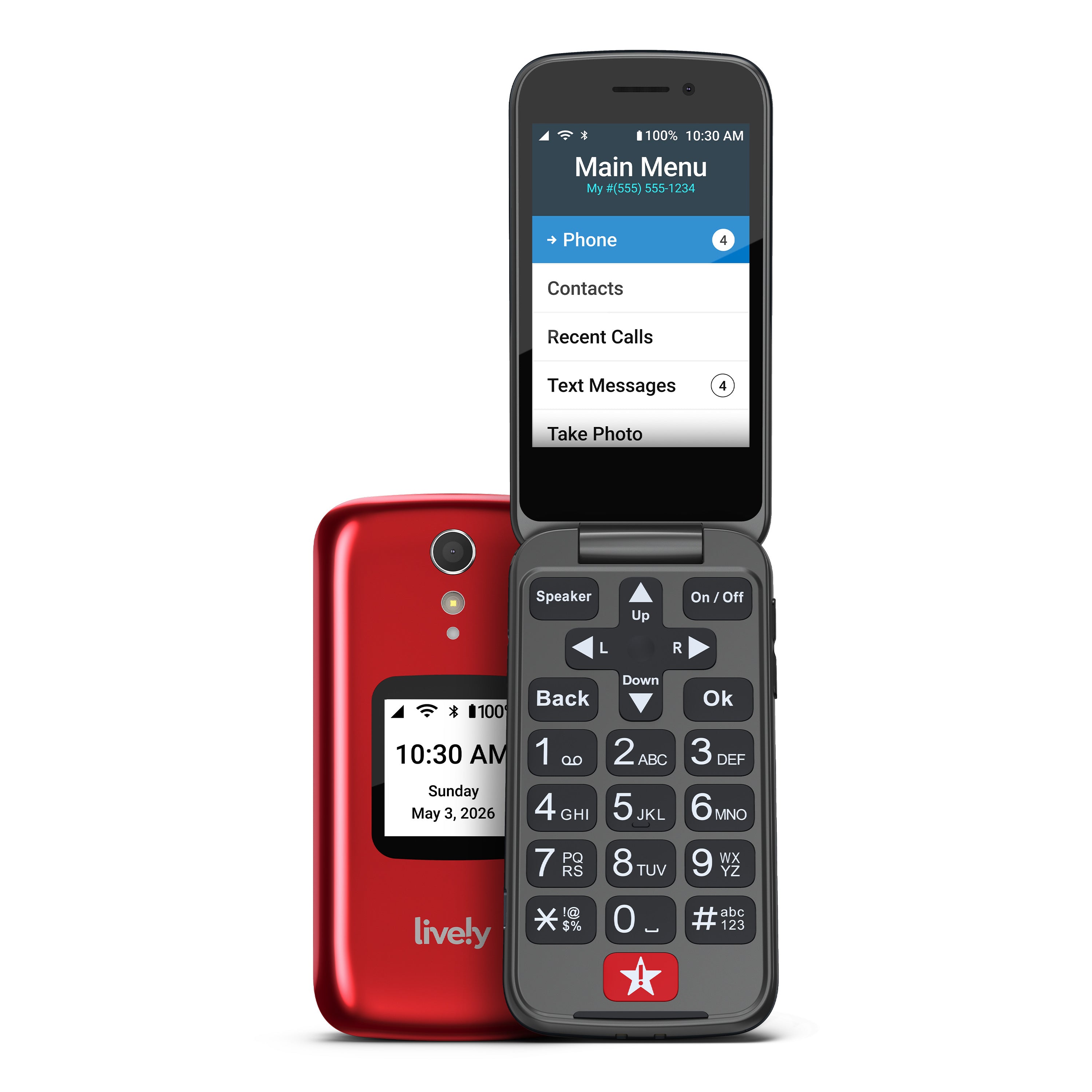
Jitterbug Flip2 Cell Phone
Large buttons, a simplified interface, and an Urgent Response button built specifically for this audience — it strips away everything confusing about a modern smartphone and keeps just what's needed to stay reachable and safe.
More info ▾
- Large buttons and a simplified interface designed specifically for older adults
- Urgent Response button connects to emergency assistance at the press of a button (subscription required)
- Long battery life compared to smartphones, often lasting several days
- Loud, clear speaker designed for users with hearing difficulties
- No confusing apps or touchscreen gestures to learn
- Limited smartphone-style features like apps, internet browsing, or a large app store
- Flip design is less durable long-term than modern reinforced smartphones
- Requires a separate Jitterbug/Lively service plan, adding an ongoing monthly cost
- Camera and voice typing quality lag behind modern smartphones
- Not ideal for users who already want texting, photos, or apps regularly
- Type: Flip phone with physical keypad
- Display: Large, high-contrast screen
- Features: Voice typing, camera, Urgent Response button
- Battery: Multi-day battery life on a single charge
- Service: Requires Lively/Jitterbug monthly plan
Lenora Adjustable Orthopedic Bed Wedge Pillow Set
Helps with acid reflux and circulation issues that become more common with age, without the cost or disruption of replacing the entire bed — it simply sits on top of the existing mattress.
More info ▾
- Helps ease acid reflux and circulation issues without replacing the bed
- Adjustable positioning accommodates different comfort preferences
- No installation, tools, or bed frame modification needed
- Memory foam construction contours to the body for added support
- Set includes multiple pillows for different positioning needs
- Takes an adjustment period of several nights to get used to the incline
- Foam firmness varies by preference and may feel too firm or soft initially
- Not a substitute for an adjustable bed base for more serious mobility needs
- Bulkier than a standard pillow, which can be awkward to store during the day
- Cover materials vary in breathability, which may affect comfort in warmer rooms
- Material: Memory foam with removable cover
- Height: Adjustable incline positioning
- Set includes: Wedge pillow plus positioning pillows
- Cover: Machine washable, removable
- Best for: Acid reflux, mild circulation issues, post-surgery positioning
iHealth Track Smart Blood Pressure Monitor
Sits just under our usual $75 floor for this list, but at-home blood pressure tracking is such a common and important ask for this age group that it earned a spot anyway — simple enough to use daily and share readings directly with a doctor.
More info ▾
- Easy at-home blood pressure tracking without a trip to the pharmacy or clinic
- Syncs to a companion app for trend tracking and easy sharing with a doctor
- Priced accessibly for such a common, everyday health monitoring need
- Stores multiple readings on-device even without a phone nearby
- Simple one-button operation for quick daily checks
- Accuracy depends heavily on correct cuff placement and consistent technique
- Requires phone and app pairing to unlock full tracking and sharing features
- Not a replacement for regular clinical monitoring or a doctor's diagnosis
- Cuff sizing may not fit all arm sizes comfortably out of the box
- App notifications and syncing can occasionally lag behind readings
- Type: Upper-arm blood pressure monitor
- Connectivity: Bluetooth to the iHealth app
- Memory: Stores multiple readings on-device
- Cuff size: Standard adult, check fit before purchase
- Power: Battery-operated, no charging cable needed

How we find the top picks
We pull live pricing, availability, and verified ratings from Amazon, Walmart, eBay, and Shein — then filter out anything out of stock or inconsistently rated.
What's left gets ranked by fit for this category, not just star count or who pays the most — so #1 is the best match, not the best-funded listing.
Frequently Asked Questions
What should I look for first when buying for an aging parent?
Start with safety and ease of use before features or price. A simple, sturdy product that gets used correctly every time beats a feature-rich one that is confusing enough to sit unused in a closet.
Are these products covered by Medicare or insurance?
Some daily living aids and mobility equipment may be covered with a doctor's prescription, particularly through Medicare Part B for durable medical equipment, but coverage varies significantly by item and by plan. Check directly with the specific insurance provider before purchasing if coverage is a factor, since retail purchases are typically not reimbursable after the fact.
How do I know if a product is actually senior-friendly vs. just marketed that way?
Look past marketing language for concrete details: button size in inches, weight capacity in pounds, actual setup steps, and real customer reviews from caregivers or older adults specifically, not just star ratings. A product that only says "easy to use" without specifics is worth a second look.
What is a fair price range for quality senior essentials?
It varies a lot by category, but within this list we intentionally focus on products priced high enough that real quality and support are more likely, rather than the cheapest listing in a category, since rock-bottom prices often correlate with flimsier materials and no real customer support.
How do I set these products up for someone who isn't tech-savvy?
Favor products with physical buttons and minimal setup over app-dependent ones where possible. When an app or Bluetooth pairing is required, plan to do the initial setup yourself in person or via a remote call rather than expecting a first-time user to complete it independently.