


Officials announced on Tuesday that a person in Pueblo County, Colorado, has been diagnosed with plague.
The Pueblo Department of Public Health and Environment said in a news release that the case was identified from preliminary test results on Friday.Â
Source of Infection

The potential source of the infection is still being investigated according to officials.
The plague is an infectious disease brought about by bacterium, Yersinia pestis, which is passed on by fleas.Â
“The Black Death�

The disease is most well known for “The Black Death,” a pandemic that killed millions of Europeans during the Medieval times.Â
The microorganisms are known to circulate organically among wild rodents and seldom transmit to people today, as indicated by the US Centers for Disease Control and Prevention.
Disease Spread
Plague can be spread to humans by bites from infected fleas and coming into contact with infected animals.Â
It can also be caught by inhaling cough droplets from infected people or animals.
Plague Side Effects

Anybody who notices the side effects of plague should seek medical attention right away, according to the CDC.Â
Sudden chills and fever, severe headache, muscle aches, nausea, vomiting, and frequently painful swollen lymph nodes are typical symptoms.
Treatment

“Plague can be treated successfully with antibiotics, but an infected person must be treated promptly to avoid serious complications or death,” said Alicia Solis according to a news statement.
She is a program administrator of the Office of Communicable Disease and Emergency Preparedness at the Pueblo Department of Public Health and Environment.
Reducing Contamination

The department states, “We advise all individuals to protect themselves and their pets from plague.”
One method for staying away from contamination is to dispose of environments where wild rodents can exist around people.Â
Minimizing Risk

For example, brush, rock heaps, waste, and piles of wood around homes, garages, sheds, and play areas, as indicated by the department.
The risk of transmission can also be reduced by taking precautions around pets.Â
Pet Advice

The office recommends treating canines and felines for fleas and keeping pet food in rat-resistant containers.
Owners should also not allow pets to roam in rat regions or sleep in bed with them.
Case Reports

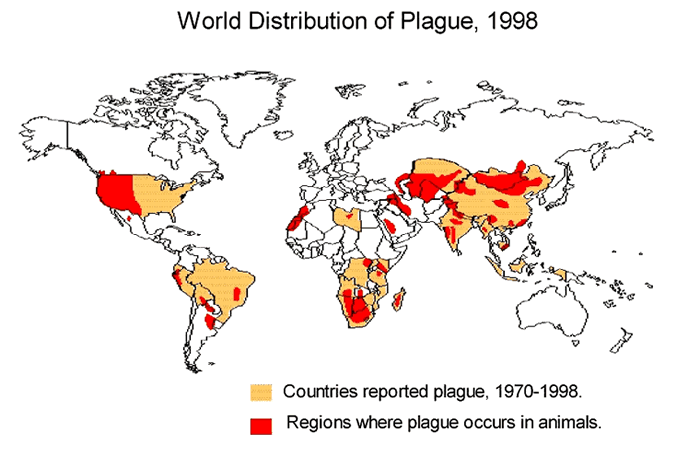
From 1970 to 2022, there were 67 reported instances of plague in Colorado, as per the CDC.Â
The World Health Organization found that from 2010 to 2015, 3,248 cases of human plague were reported worldwide.Â
Frequency of Disease

Cases were most frequently cited in the Democratic Republic of the Congo, Madagascar, and Peru.
“A plague vaccine is no longer available in the United States,” the CDC says.
Vaccine Availability

They went on to say: “New plague vaccines are in development but are not expected to be commercially available in the immediate future.�
Additional advice from the CDC includes wearing gloves if you are handling or skinning potentially infected animals.
If you think you have been exposed to fleas during outdoor activities use repellent to minimize the risk of infection transmission.
